Audiovisuals
at tagg.org


Updated 2022-05-26
Long video? Buffering issues? [HELP].
Copyright issue? Click here
Brazil 2021 links

MUSEMATIC
EDUTAINMENT VIDEOS
produced by Philip Tagg since 2005
Listed in reverse chronological order
→ Go to top of listing ←
↓ Direct access picker (selection)↓ |
|
|
|
|
|
|
Bodyform:
What a scream | Bulgarian diaphony
Buzz Roar Click Crash |Dixie Chicks | Emmerdale
Dominants/Dominance | Emmerdale
commutations
Fernando | Form & Médecins|Intel Inside Analysis|
Duo Seraphim | Kojak | Kojak Commutations |
Milksap Montage (all!)|
Mixolydian
Montage |
NYPD Blue Titles (2018 version)
Scotch Snaps [1:14:54] | Music from The Mission |
What (the hell) is Tonality? | Alexander
Nevsky materials
Musematic edutainment videos
produced in 2016 and thereafter
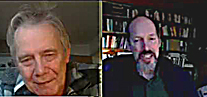
Jochen Eisentraut: Interview with Philip Tagg — a Star of Popular Music Scholarship. [56:32; 2021-02-08] A Talk in Ideas interview. Says Jochen: “Philip Tagg is one of the pioneers of the academic study of popular music. He is known for his rich analyses of musical meaning in songs and TV themes such as ABBA's 'Fernando' and the title music of the 70s American cop series Kojak. He typically looks at both the musical material itself and its meanings and connotations. Dr Tagg was professor of musicology at the Université de Montréal and his work is widely quoted in the academic literature. In this thoughtful interview he talks about his work and his ideas about music, politics and culture..” [Uploaded 2021-02-08 to Jochen Eisentraut’s ‘Talk in Ideas’ channel on YouTube; +  safety copy free from YouTube and Google snooping on this site.]
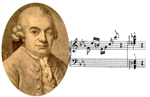
 C Ph E Bach: Rondo II in C minor (Wq 59/4) from 5th collection of keyboard pieces 1785. [5:42; 1994/2020] A crazy piece that changes affect every second or two, a bit like nervous cutting in an action movie, except that it’s a euroclassical rondo. Each museme stack has its very clear ‘meaning’. It switches mood as starkly as it switches key and takes on all contemporary styles from the galant to Papa Johann Sebastian’s toccatas and fantasias. First time I heard this piece I fell on the floor with side-splitting laughter every time the loud Neapolitan sixth chord was thrust at me. While there’s something of Monty Python and MTV about the piece, it’s also quite disturbing, I think. Where on earth were things going if you were living in Hamburg in 1785? Where are they going today in Europe and North America? Synchronised notation. My own recording, using the standard Piano preset on a Korg M1 synthesiser.

Sven
Klangs Kvintett: Whispering and Over The Rainbow [4:55;
2019-09-29]. Two
key scenes (here at 00:12 and 02:15) demonstrating the power of music and the music
of power. You don’t have to be a Charlie Parker fan but it's hard not to respect his music when you hear/watch this clip (Christer Boustedt on sax)

Que la bête meure: opening sequences (2019-09-05)
Two
videos (06:25 and 02:51) for music analysis of opening sequences to Chabrol
film Que la bête meure (1969). Includes timings, synchronised
score of Brahms excerpts, English translations from French and German, etc.
Benny
Andersson interviewed in 2011 by Fredrik Skalvan re ‘political’
and 1970s (extract, 1:59, 2019-06-09). In Norwegian and Swedish with English subtitles.
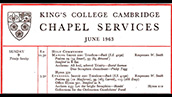
Duo Seraphim
(4:42,
HD, 2018-04-05)
SSATTB anthem for Trinity by Philip Tagg,
sung by the choir of King’s College Cambridge, conducted by David Willcocks,
on Trinity Sunday, 1963. This video includes the synchronised score.
Apologies for the abysmal audio quality of the recording — via a Philips reel-to-reel
machine at 3¾ i.p.s. with distortion at high-volume peaks, all transferred to cassette.
Still, the gutsy enjoyment of the piece is infectious, unmistakable and rendered faultlessly
by the choir. I was impressed then and still am 58 years later. Worth a listen even if the audio quality is rubbish. Full
score also available separately.
John Mellencamp inducted by Billy Joel into the Rock and Roll Hall of Fame
+ Pink Houses (live, 2008) (2018-03-16) [12:04]
‘Don’t let this club membership change you,
John’, says Billy Joel [3:35]. ‘We need you to be pissed off and
restless... People are scared and angry... They need a voice like yours to
echo the discontent out there in the heartland... Someone’s got to tell
them “don’t take any shit” and, John, you do that very well.’
John says ‘The sword is a mighty weapon but it ain’t nothing compared
to the songs and the words in the songs we sing.’ Then [6:40] he and
the band do a live performance of Pink Houses (originally
on LP Uh-Uh from 1983). This video contains English subtitles,
song lyrics, chords, a little bit of notation and a few extra images. It has
been edited down to 12 minutes and the audio track improved from the original
ceremony [28:49] on YouTube.
NYPD Blue Title Music: semiotic analysis, provisional version (Sept 2018) [51:54]
Music carries a lot of important ideas and ideologies in this
60-sec piece of US prime-time TV. How does it work?
Synopsis
[0:27] Intro. [1:22] Mike
Post & Steve Bochko. [2:11] Original visuals with Post’s music and
time code. [3:25] Same with basic notation added. [4:37] Progress bar and
narrative structure. [5:36] Overall parameters (a) speed, (b) visual editing,
(c) tonicality. [8:45] Semiotics: AO, IOCM, PMFCs. [11:22] 'A' section: library
music IOCM & PMFCs. [15:44] 'B' section IOCM, PMFCs and pastorality: (a)
Vaughan Williams, (b) library music. [20:21] Triangle AO > IOCM> PMFC
> AO and the deductive connection ('B' section). [23:23] Intrinsically musical analysis. [26:00] The 4th corner (PMFC[AO]): reception tests,
Mike Post, drums and subway. [29:17] Big drum sound types 1 (‘smack’)
and 2 (‘boom’); modern mechanised warfare. [33:59] WW1 footage and
Vaughan Williams. [35:58] Vaughan Williams, WW1, Butterworth, Gurney, shell
shock. [38:36] My great uncle, remembrance, loss. [39:44] Critiques of musical
pastorality. [41:25] ‘Paradise’ and ‘Paradise Lost’. incl.
taptoe from Pastoral Symphony (1922) and mass graves. [43:45] English musical
pastorality as Utopia. [44:36] Jingoism, the Euroclassical tonal idiom and
nationalistic fervour [45:37] Rule Britannia. [46:06] Land Of
Hope & Glory. [47:45] Onward Christian Soldiers (4 versions).
[50:35] Terror chords: Holst, Star Wars and games audio [51:50] temporary
ending.
Right-click to download —> "Save link as..." Downloading this video direct from tagg.org avoids eventual buffering problems.
Musematic edutainment videos 2017-2023
Supplement (6:54, 2017-10-23) to Dominants
and Dominance (see here) I-IV-V, I-V-IV, etc. incl. La bamba, Guantanamera and Almost Gone (Eagles)
How to make a short extract from a video into a loopable file using Sony Vegas 12 (2017-10-19) [1:49] 6-step instructions
How to download Vimeo files to a PC (2017-10-15) [1:17] video 4-step instructions (Dickson of Dock Green example) . See also Vimeo Help Centre.
WIkihow 6 Easy (and Safe) Ways to Convert YouTube Videos to MP3.
Phil Collins, Gated Toms and Ringo [3:56] [2017-09-21] Extracts from 1998 interview on French TV. Original integral version posted by Tony Menard on YouTube in December 2015. Section 1: Story of the Gated Toms [0:06, ff.]. 2: Respect for Ringo [2:52, ff.].
Miami Vice Theme: score [HD 1:25] [2017-09-17] Jan Hammer’s 1984 theme music transcribed by Bob Clarida, as in Ten Little Title Tunes, p.633, ff. and synchronised with the original audio.
Selected IOCM and analysis snippets
— [1] IOCM Miami Vice <‘>The Who: My Generation [0:16] (2017-08-13).
Purcell:
Fantasia for 4 Viols, Z738 (1680) [4:55] [2017-08-12] An extraordinary 4½ minutes of very moving music, including numerous ‘false’ relations that are anything but, as well as sudden and brief mood swings: fantasia indeed! Concentus Musicus’ (Vienna) Viol Consort and a crisply reset synchronised score in G and F clefs (no C clefs).
Dowland: The Earle of Essex His Galiard
= Can She Excuse My Wrongs? (1605) [4:04] [2017-06-30] 3 versions with synchronised 3-stave (5-part) notation as reduction.
Dowland: The King of Denmark’s Galiard (1605) [3:32] [2017-06-30] 3 versions with synchronised 2-stave (5-part) notation as reduction with chord shorthand.
Fernando
the Flute - Episode 1: Score and Musemes [15:36] [2017-05-17] Semiotic music analysis materials accompanying the book Fernando the Flute IV (2017). Includes: [1] synchronised score of the English version of "Fernando" (Abba, 1976) [01:02-05:23]; [2] Basic musematic method (IOCM & PMFCs) [05:23-11:38]; [3] Quick presentation of musemes [11:38-14:56]; [4] End credits [14:56-15:35].

Nationalteatern/Nynningen: Doing the omoralisk schlagerfestival (1975) [4:26]
[2017-05-14] [1] Original SvTV2 footage from Alternativfestivalen synced with audio from MNW single. [2] On-screen synchronised Swedish lyrics with [3] English subtitles and [4] lead-sheet chords. Credits at end. Kolla också Nanne & Peter Grönvalls förträffliga live metalversion från 2010.
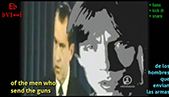
Jackson Browne: Lives In The Balance (1986) [5:03] [2017-04-27] Analysis material: [1] original audio and video with [2] on-screen
synchronised English lyrics with [3] subtítulos en español,
[4] lead-sheet chords, [5] harmony annotations, [6] instrumental
annotations. This song, recorded at the time of Reagan's illegal
dirty-tricks war in Central America, is unfortunately just as
topical in 2017 as it was in 1986. ‘There's a shadow on the
faces of the men that send the guns to the wars that are fought
in places where their business interest runs’. The music here
is as politically expressive as are the lyrics and video montage.
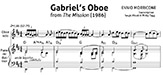
Morricone:
Gabriel’s Oboe from The Mission (1986) synchronised transcription [2:06] [2017-04-07]
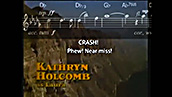
How the West Was Won (Macahans) [3:35] [2017-03-11] TV Title sequences (1970s): (1) straight; (2) with simplified score and titled commentary

How
to put notated music examples into text documents [6:49] [2017-01-28] How to export a music example from MuseScore as an image file, how to format that image file using Photoshop and to make it fit perfectly into the text file you’re writing.
Musematic edutainment videos 2016
[go to 2016+ | 2014 | 2013 | 2012 | 2011 | 2010 | 2009-]
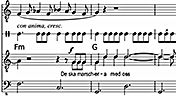
Hoola
Bandoola Band: Victor
Jara [4:56] [2016-12-10]. Original recording [4:27] of Hoola Bandola's Victor Jara (1975), synchronised throughout with adequate
transcription. For discussion of this tune and for more material
about it, including English translation of Swedish lyrics, click
here.
Love
& Death pastiche of Alexander Nevsky battle scene [1:24] [2016-12-08] Battle scene from Woody Allen's Love
and Death (1975: 0:21:00-0:22:11) in which Prokofiev's music
for the ‘Battle on the Ice’ scene in Alexander Nevsky is performed at 186 bpm, not 122!

Alexander
Nevsky (dir. Eisenstein, mus. Prokofiev) with embedded timecode and new
English subtitles [1:48:31] [2016-12-03]. To
avoid frustration with download times and endless buffering it may
be worth downloading the whole film to your own hard drive. Restored version (1986) of complete Mosfilm original
(1938). I've added over 500 legible English subtitles
for the dialogue, titles and credits. Timecode has also been added
throughout to facilitate exact and unequivocal referencing of
sonic and visual events. For more info and for other materials
relevant to studying this film, especially its music, click here.
[HELP]
The
Quick Quartal Repertoire Montage [7:27] [2016-11-01]; also radically abbreviated
version on YouTube [3:03].Demonstrates the breadth of repertoire and the everyday
ubiquity of quartal harmony. Contains extracts of music by
Borodin, Debussy, Bartók, Stravinsky, Hindemith, Copland,
Joni Mitchell, King Crimson, Manfred Mann, Clarence Ashley. Features
also news jingles (ABC, CBS, BBC, ITN, Channel 9, Antenne 2, Canale
Cinque), quartal signals on digital devices and power chords for
Manga videos. It was originally used as illustration to the "Scotland" PowerPoints (Nov 2016).
-
Tonality & Modality (1:09:12, HD, 2016-09-08)
Constructive critique of some of conventional music theory’s most embarrassing
conceptual excesses. Live presentation at NIMiMS
(Network for the Inclusion of Music in Music Studies), Symposium, 20 Nov,
2015. Helsinki University, Musicology, Topelia building. Video: Jouni Eerola
/ JAPA.
Backbeats, Bluenotes and Scotch Snaps (49:39, HD, 2016-06-17) Music analysis v. standard historical narrative. Live presentation at NIMiMS (Network for the Inclusion of Music in Music Studies), Symposium, 20 Nov,
2015. Helsinki University, Musicology, Topelia building. Video: Jouni Eerola
/ JAPA. Also on YouTube
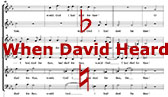
Thomas Weelkes (1575-1623): When David Heard [3:34] [2016-07-22] No parent should have to experience the death of their child. Despite
its modest resources, this SSAATB madrigal is about as passionately devastating
as music can get. The grief is deceptively decent but very moving and raw: Hollywood
and Grand Opera, go home! Check out the "false relations" in bars
7 and 48 (twice); the woeful Neapolitan sixths in bars 22-24, 33, 36; the
exposed "O"-s in bars 28-29, 50-55; the sudden A minor chord (in
C minor) at the end of bar 10 (ouch!); and the 19 outbursts of "Would God I had
died for thee!" in bars 39-49. Score synchronised with recording by The
Consort of Musicke (clear, unaccompanied single voices) under Anthony Rooley
(1999).
Tagg's Paris Voice Montage [17:33] [2016-03-01] 79 numbered vocal extracts (± 13" per extract)
from dozens of different styles/cultures and including scores of different
vocal personas. Used at conference La voix dans les chansons : approches
musicologiques, Paris 2016-03-04, to highlight central issues about the
perception and description of voice in music. Best if seen/heard in conjunction
with the following: [1] Chapter 10 in Music’s
Meanings; [2] PowerPoint presentation Dénoter
la voix (in French & English); [3] Excel
file of source information and comments relevant to the montage. [HELP]
Musematic edutainment videos 2015
[go to 2016+ | 2014 | 2012 | 2011 | 2010 | 2009-]

J
S Bach: ‘Great’ B minor prelude for organ, BWV 544, with synchronised
scrolling notation [7:34 (w. credits)] [2015-10-19]. I stopped playing church organ when I was 19, but
I have since then often heard this passionately anguished yet dignified and
sometimes playful prelude in my head. When, 30 years later, I finally acquired
an instrument allowing me to make this amazing Bach piece come to life again,
I recorded it using my Korg M1 and MIDI editing software of the day. Maybe there’s
a little too much 16' sometimes in my recording (and the reverb is certainly
excessive) but I think this version has a lot of get-up-and-go, so I'm not ashamed
to put it on line. If you enjoy it a quarter as much as I enjoyed playing it,
you'll have made my day!
Elis Regina: Palavra de mulher (‘Vou voltar’) (with bilingual lyrics on screen) [2:44] [2015-10-10]
I use this recording of a song by Chico Buarque
and Tom Jobim ‘included on the soundtrack album Ópera do Malandro,
a 1985 Brazilian approximation of The Beggar's Opera to illustrate
the concept of vocal persona. Elis Regina passes with considerable vocal passion
from nice confidante to wanton lover to psycho bitch to vulnerable little
girl, etc., etc. This video material consists solely of timecode and of lyrics
in both original Portuguese and in English translation so that students can
note points at which Regina’s vocal persona changes.
Legião
Urbana: Faroeste Caboclo subtitled with
bilingual lyrics) [9:20] [2015-08-21]. Original 9-minute studio audio track accompanied
by complete synchronised lyrics in Portuguese with English translation (thanks
to Bosco De Oliveiro). Musically somewhere between folk rock and punk, this
song, consisting mainly of 42 8-bar verses in 4/4 time (c. 12 seconds each),
seems to be in a simple strophic folk ballad story-telling sort of form. That
observation may apply largely to the tune's first 3 minutes, after which the
backing starts to vary considerably in terms of instrumentation, groove, articulation
and harmony. Renato Russo (lead vocalist) also exploits a range of vocal personae.
All these variations underline the dramatic (comic and highly tragic) narrative
of the lyrics. I'd like some time to write an analysis of this piece. If and
when it's done, this description will contain a hyperlink to whatever text
I manage to produce. (Faroeste means the far West (the Wild West) and
a caboclo is basically
a Brazilian of mixed race (see Wikipedia)).
Ingmar
Nordström’s Dansa dansa and Swedish dansbandsmusik.
[7:31]
[2015-05-14] Teaching material including one full example
and a montage of several extracts illustrating one type of Swedish dansbandsmusik that has, since the 1970s, been hugely popular all over Scandinavia. I intend
to write an explanatory text about the importance, influence and, yes, interest
of this type of music that was generally regarded as the epitome of uncool,
as the depth of banality and of bad taste, by virtually every rock and jazz
musician I met when living in Sweden (1966-1991), When I've written that piece,
I'll put a hyperlink up here. Meanwhile, I hope this video will give you some
enjoyable musical food for thought.

Folk
och rackare: Vänner & fränder (Rackarspel,
1978) [4:51] [2015-04-28]
Basic notation and lyrics in Swedish and English
added to studio recording from album Rackarspel (Folk och Rackare,
1978). Documentary value as: [1] a Scandinavian double-hemitonic
pentatonic/hexatonic melody ‘1 #3 4 5 b6 (b7); [2] the recording on which
popular latter-day versions of the the tune were based. Aesthetic and socio-historical
value also considerable!...
Folk och
rackare: Lussi Lilla (Rackarspel, 1978) [4:10]
[2015-04-29]
Basic notation and lyrics in Swedish and English
added to studio recording from album Rackarspel (Folk och Rackare,
1978)
Jeffrey
Cain: Whispering Thunder (1972)
[4:06] (v2. 2015-10-17)
This
simple but effective three-chord political song, honouring Jonathan
P. Jackson's attempt to free his brother George, recounts the
tragic Marin County Courthouse events of August 1970, in which
Jonathan Jackson and several prisoners he had freed, as well as
the County Court judge, were all killed. The last two lines of
the last verse run "This is the story of one young brother
with the blood boiling in his veins. This is the story of the
whispering thunder that comes before the rain." I've posted
this musical wake-up call, complete with fateful aeolian shuttle
(bVI<->i), because I can't find it on iTunes, and because
I think it should be known.
 and
and 
Arnolfini Marriage Portrait (“dog” & 007 chord: poïetic/aesthesic) [from Epistemic Diffraction]
[1:35]
007 end: Unequivocal Timecode Designation (demo)
[0:12] [from Epistemic Diffraction]
Fame
Rock Academy Montage [1:08] (2015-01-15) [no YouTube] Short, facetious montage of logos for rock academies,
colleges and schools, all set to the theme tune from Fame.

Troubles
with Tonal Terminology -1: What [the hell] is 'Tonality'? [19:57] (2015-01-09). An attempt to bring sense into central
concepts of music theory so they can be usefully applied to other musics
than only those of the euroclassical and jazz canons. The silly use
of "atonal' and of the absurd binary "tonality v. modality" are two
topics of focus in this first in a series of videos about the terminological
trouble with conventional Western music theory.
Musematic Edutainment Videos 2014
[go to 2016+ | 2015 | 2013 | 2011 | 2010 | 2009-]
Timbre [1:09] (2014-10-08). Very short clip in which four instrumental sounds (analogue synth pad,
gong, piano and symphonic strings) demonstrate, very simply, the four phases of the ADSR envelope (gong and piano just Attack and Decay.
Guantanamera
Endings [2:29] (2014-07-27) [also
on YouTube]  .. [1] Joseito Fernandez; [2] Célia
Cruz & Tito Puente; [3] Pete Seeger; [4] The Sandpipers. Does
it go from I to V or from IV to I? Or neither? Or both?
.. [1] Joseito Fernandez; [2] Célia
Cruz & Tito Puente; [3] Pete Seeger; [4] The Sandpipers. Does
it go from I to V or from IV to I? Or neither? Or both?
Gilles
Vigneault, Gaston Rochon: Tout l'monde est malheureux [2:30]. LP Le Nord du Nord (1968), texte intégral, quelques
photos personnelles.
Sokrátis
Málamas/Σωκράτης Μάλαμας: Prigkipesa/Πριγκιπἐσα (=Princess) (2006) [4:52] (2014-01-21). Live performance —with Χάρις Αλεξίιου, Αλκίνοος Ιωαννίδης. Μπαμπης Τσερτος at Likávittos, Athens, Sept. 2006— of this hugely popular Greek hit first issued
on CD in 2000. This video shows the melody and all lute (laouto)
fills in notation, basic chords symbols, and the Greek lyrics
with a simple English translation. If you think slow tunes in
minor modes (here phrygian) are intrinsically morose, watch/hear
this and think again! If you want to know how to make a good droney-open-fifths
sound, watch/hear this. If you think most really popular songs
are junk, watch/hear this instead. If you're anglophone and don't
know much really popular stuff from any other musical culture,
watch/hear this. And if you want to get a personal idea of the
sort of thing young Greeks were feeling not long before their
national economy collapsed, watch/hear this. This video exemplifies
the sort of truly popular music that rarely gets attention in Anglocentric
popular music circles. A short coda lists 40 artists
who covered the song. That’s popular music way off the radar
screen for many anglophone popular music scholars.
Dixie
Chicks - Not Ready To Make Nice - contextual analysis footage [10:39] (2014-01-05). To
prevent this 10-min. video from stopping and starting due to buffering
during download/playback, try first downloading the whole video
instead and then play it on your device [HELP].
One of the clearest and most popular
examples of music's relation to politics. The courage, integrity
and musicality of the Dixie Chicks is also evident in songs like Not Ready To Make Nice, recorded ‘post-Shepherd's-Bush’. The video is in three parts: [1]
before ‘the Sheperd's Bush incident’ (2003); [2] post-Shepherd's
Bush, hounded by C&W rednecks but determined to ‘do the
right thing’; [3] their song Not Ready To Make Nice (2006)
‘the right thing!‘ with scrolling lyrics, tune and chords
and images both from Australian TV and from the excellent film Shut Up and Sing! (dir. Barbara Kopple). This song and
its context provide a potent and uplifting example of music semiotics
at work in an inescapably political context. In the video I omit
discussion of the ‘fateful’
aeolian shuttle, the ‘protest’ acoustic guitar,
the positive anger and its vocal celebration and many other musical
details about the song. The video’s aim is to explain the context
in which the Dixie Chicks produced those sounds. N.B. This
material is not available elsewhere on the web due to copyright
restrictions.
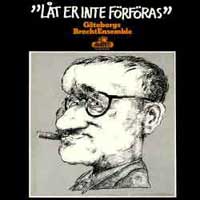
Göteborgs Brechtensemble: Alabama Song (Brecht/Weill) [4:43] (2014-01-02). This
is my favourite version of Kurt Weill's famous tune from Aufstieg
und Fall der Stadt Mahagonny (1930). The rock arrangement
in the verse parts ‘Bengt Blomgren on guitar, Bernt Andersson,
the arranger, on keyboards, and Liliane Håkansson (lead vocals)‘
give this 1979 recording plenty of whoomph, while the soupy
sax, blasé vocals and cheap-bar electronic piano of the refrains
make for a disturbing contrast to the balls of the verses. No
wonder capitalism is failing. It's sick and will fail. I'm sure
that'll give me as much joy as this recording! Source: LP Låt
er inte förföras (= Don't let yourself be seduced!), Avanti AVLP 06 (1979).
Musematic Edutainment 2013-2010
[go to 2016+ | 2014 | 2012 | 2011 | 2010 | 2009-]
Víctor
Jara: El derecho de vivir en paz [4:36] (2013-09-09). Original
videotape footage from August 1973, shortly before he was tortured
and killed by the Pinochet régime’s murderers, of
Víctor Jara performing El derecho de vivir en paz ‘The
Right To Live In Peace’ a song of hope and decency. [It was later covered with great aplomb by Congreso].
I've added subtitles in Spanish for the lyrics and in English
as translation of Víctor’s preamble and of the Spanish lyrics.
I've also supplied the video with lead sheet chord shorthand and with references to other recordings of this
and other Jara songs.

Form
and the Night Doctors [8:41]
(2013-06-30). Using Vladimir Cosma's title theme
for Médecins de Nuit, this video demonstrates the
importance of considering syncrisis ("now sound", groove,
intensional dynamics, etc. in the ‘extended present’) as form. "States of musical being"
(shuttles, loops, syncrisis) are as important as "places
to go" (harmonic processes, etc.) and conventional notions
of musical form. This video was produced for a conference on popular
music analysis (Liverpool, 2-4 July, 2013).
Cwm
Rhondda Cymraeg/Cwm Rhondda in Welsh [2:42]
(2012-07-05). Re-edit of existing YouTube post, here without voice-over
or stills of 78 rpm player. Instead: Welsh text and sheet
music of the famous hymn (SATB in A flat) sung by
the Boro Choir.

Harvest
Song from Bulgaria [3:37] (2011-12-22). You may think simultaneously sounded semitones are discordant. Perhaps you argue that fourths, fifths and octaves are natural consonances because they correspond to simple pitch ratios but omit to mention the acoustic complexity of thirds and sixths in the 'common triads' of our equal-tone temperament, not to mention the tritone inside virtually every single standard jazz chord. Perhaps you even cite the common use of semitones in horror scenes as 'proof' that semitones are 'naturally' discordant. This clip demonstrates that such assumptions are as false as they are ethnocentric because the seven women heard here are definitely having fun singing semitone dyads and clusters for half of this harvest song. Comments in this video are by Prof Claire Levy (Sofia) and myself.
The
Minor Seven Flat Five Montage [8:10; 2011-10-30] . Whether you think of it as ii7, iv6, the 'Tristan chord', or "half diminished", m7-5/m6 has a recognisable aural identity. This montage demonstrates the connotative coherence of the chord, as documented on pp.180-204, 566-573 in Ten Little Title Tunes.
Kojak
Theme Commutations [7:57; 2011-10-29]. Original version plus five radical
rearrangements of Goldenberg's 50-second TV theme from 1972: classical,
Renaissance, spy rock, pastoral idyll and bossa nova cocktail lounge.
Shows importance of accompanimental parameters of expression (chiefly
harmony and groove but also some instrumentation and aural staging).
Relates to my PhD thesis Kojak -
50 Seconds of Television Music, also to videos Kojak: 50 Seconds of TV Music to analyse and The
Kojak Theme: Score and Museme 2. All materials useful in
semiotic music analysis.
Scotch Snaps - The Big Picture [1:14:54] (2011-05-11)
‘I just got home to Scotland from
the Clifftop Appalachian String Band Music Festival in West Virginia. [T]his video came up in daily conversation and was recommended.' (Viewer
comments, 2018-08-08)
This feature-length research study has been banned worldwide by Google’s legal team in the spirit of 'free enterprise' (fuck other freedoms).
— See Bruce Johnson’s review of this feature-length film in Equinox (2013: 86-87) —
A huge social and cultural history is embedded in the microcosm of this two-note rhythm. Issues addressed: [1] What is a Scotch Snap? [2] How does it relate to language, class and ethnicity? [3] Is it just Scottish, or is it also Irish, Welsh, English, West African, Hungarian, "Celtic", "black", "white" or what? [4] It's used by Henry Purcell, Béla Bartók, Mahalia Jackson, Woody Guthrie, Stevie Wonder, Ry Cooder, James Brown and Buck Owens; and you'll also find it in Strathspeys, traditional English ballads, Appalachian fiddling, string band music, spirituals, white gospel, black gospel, even in West African time lines, but you won't hear it in mariachi, mbaqanga or MPB (música popular brasileira), nor in the music of South or Central Europe. [4] If it has to do with English language rhythm why did it disappear from English music during the 18th century to re-emerge globally in popular musics of the 20th century? [5] Why did Dvořák think that "Negro" and "Scottish" musics were similar? [6] How come some music of English origin is labelled "Celtic" when England is seen by fans of "Celticity" as the devil incarnate? This instructive but entertaining video offers an alternative to ethnic fixations in popular music history and genre labelling. See also Temperley, N., & Temperley, D. (2011): ‘Music-language correlations and the “Scotch Snap”’ in Music Perception 29 (1), 51-63. [HELP]
Supplementary materials relevant to this video:
Contents
with timings | Source listing | Discussion | Voiceover
text | (all html)
Dominants
and Dominance/Dominantes y dominación [21:35] (v2, 2011-03-20) . English con subtítulos en español.
For Musicology & Colonialism conference, Montevideo, Oct.
2009. “It's pointless trying to force the conceptual grid of conventional
harmony lessons on to music that conventional harmony experts
have spent countless lifetimes avoiding or trivialising / Es
inútil forzar la matríz de las lecciones de armonía convencionales
para aplicarla a música que los expertos de armonía convencional
se han dedicado a evitar y trivializar.” Incl. extracts by Tom
Russell (Who's Gonna Build Your Wall?), Carlos Puebla
(Che), Sabicas (Malagueña). [HELP]
Epistemic
Diffraction or Integration? / ¿Diffracción epistémica o integración? [29:20] (v2, 2011-03-03). In English, subtítulos en español.
Video for Universidad de Villa Maria (Córdoba, Argentina, Oct.
2009). It sets out the basic epistemic problems of teaching and
learning music in our tradition of knowledge, including a critique
of "absolute music" and suggestions as to how we can
make knowledge in and about music more democratic and more accessible
to "non-musos". Includes footage from Dixie Chicks' Shut Up and Sing movie (2006). [HELP]

Buzz,
Roar, Click, Crash [32:40] (2011-03-03)
Men, shaving, power chords, guitar distortion and rock tropes sonically commodified in the 1986 TV ad for the Philishave Tracer. Analysis, exemplification and discussion. How and why the sonic anaphone guitar distortion = motorbike is central to the rock daredevil myth and to the sale of a 'rock lifestyle'. Keywords: rock music semiotics analysis guitar distortion motorbike sound biker aesthetics advertising Ducati Harley Davidson heavy metal power chord trope myth musicology history gender daredevil death danger thrills excitement drums timbre sonic kinetic tactile anaphone museme connotation buzz roar rumble grrrr. [HELP]
Musematic Edutainment videos 2010
[go to vids from | 2016 and after | 2015 | 2014| 2013 ] 2009 and before
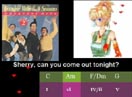
The Milksap
Montage [12:39]
(v2., 2010-10-31)
I vi ii/IV V : what does it mean? Extracts from 52 US pop records 1957-63 illustrated with chords, teen angels, angel babies, girl groups, devotion, heartache and "all those goddam Bobbies" (as Jerry-Lee Lewis put it). �This
video “is a truly virtuosic creation”, said www.pmgentry.net/blog/, “52 pop singles in the United States
that used the progression, arranged by key... Album covers, animated
charts of the chord changes, and visual snippets demonstrating lyrical
content flash by while you listen”.
42
Gabriel's Oboes (complete) [19:59]
Montage of online performances of 'Gabriel's Oboe', one of the main themes Morricone wrote for 'The Mission' (1986) and one of the most widely performed pieces of music. Teaching material for film music analysis and popular music aesthetics.
Intel
Inside Analysis (full) [11:07] (2010-09-27, orig. 2005)
What does the famous 4-note jingle mean and how does it work? What does music communicate in this 1990s ad? What other music and moods does the jingle resemble? Are marimbas "corporate"? Why no guitar? Why no quality symphony orchestra? Video illustration used in teaching Music and the Moving Image and in the semiotic analysis of music.
 Engish | Français
The
Banjo in Black and White (English) [2:43]
(2010-03-31]
A very brief illustration of problems
involved in labelling musics (or musical instruments) according
to skin colour. Should be viewed in conjunction with PowerPoint
presentation British
Bluenotes and Backbeats and the Open
Letter about 'Black Music', 'Afro-American Music' and 'European
'.
Le
banjo en noir et blanc (en français) [2:44]
Simple illustration du problème
d'appeler une musique « noire » ou « blanche ». Le banjo,
aujourd'hui associé à la musique populaire de certains
états-uniens blancs, a évidemment des origines ouest-africaines.
Ce vidéo ne raconte pas l'histoire au complet; il faut
lire la « Lettre
ouverte » afin de le contextualiser.

The
Emmerdale Commutations (complete) version 6 [8:41] (2010-02-19)
Pastoral
idyll or place of great evil? Will any music fit this footage?
With notation and musical commentary. Musical meaning in a TV theme. Title sequences from Yorkshire TV, original theme tune by Tony Hatch. Commutations and transscansions. Teaching material for film music courses. For more, see the Ten
Little Title Tunes pp. 503-519.
Musematic Edutainment videos 2009 & before
[go to vids from | 2016 and after | 2015 | 2014| 2013-2010]
Droned
Fifths for The Tailor & The Mouse [8:41] (2009-07-08) [also on YouTube]
Step by step demo of how to use drones and parallel fifths to create convincing pseudo-medieval harmony for modal tunes. There are no dominants or subdominants: just a the droned keynote and the tune's tonal pole (the other tonal constellation it goes to). These quintal/quartal chords sound much better than the those tired old tertial triads!. "The Tailor and the Mouse" (hexatonic minor) is used as an example. On-screen illustration, notation and animation. Teaching material for classes in Popular Music Analysis.
YouTube Takedown Rant (provisional) [3:32] (2009-01-01) [only on YouTube]
Provisional rant about the inequitable absurdities whereby I'm barred from doing my educational duty to spread knowledge and understanding about music in the modern media. YouTube lets big corporations block the information it's my job to disseminate.

What
A Scream! The insanity of a sanitary towel ad [10:00] (2008-12-31)
"Waaah! Bodyformed for you". This music-semiotic analysis suggests
that panty liners are even less likely to trigger orgasms than
to be soaked in bluey-green liquid. And yet that is all quite
normal in consumerist propaganda: 'advertisers' can tell whatever
connotative lies they like. This analysis material also starts
to ask questions about links between the me-me-me subjectivity
of the 1980s and musical phenomena like the "plastic glitter";
keyboard sound or chord vamps ending vi-V. Those questions get
no answer here! Teaching material for Music and Moving Image students.
Mixolydian
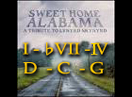
Mini-Montage [5:24] (2008-09-02)
Mixolydian chord loops from nine well-known rock recordings in different
keys with clockwise circle-of-fifths movement and anacruses. The most common mixolydian chord loop (I-bVII-IV or bVII-IV-I) animated, explained and illustrated using extracts from well-known rock recordings in different keys. Useful and amusing for anyone wanting to get to grips with realities of harmony in popular music. Practical demonstration of writings on one aspect of harmony (more details in Everyday Tonality). Before its take-down by YouTube, the original version of this edutainment clip from June 2009, now on Vimeo and downloadable from this site, had 2,292 views, 21 likes and 2 dislikes. It had been banned because it cited, 100% legally, ten seconds from The Kinks’ Twentieth Century Man (1971). Since US federal copyright law about fair use (Title 17, sections 107-108 plus the Campbell v. Acuff-Rose precedent about transformative use) doesn't seem to include YouTube users, I've replaced those 10" (1.7% of the clip!) in a YouTube censored version with a rudimentary MIDI passage illustrating the same basic chord sequence. The remaining 5'14" (614 seconds) in this censored version are the same as in the original uncensored version you can hear/see on .
Vocal Persona Commutations [2:22] (2008-01-01)
Examples of coherence
and incoherence between vocal, gestural, social and emotional aspects of personality. See also Music’s Meanings, Chapter 10.
God, Queen, Jude & Nation [3:35] 2007-07-19
Extracts from Party at the Palace (Queen's Jubilee, 2002),
with patent musicological and immanent social commentary. (Ten
Little Title Tunes pp. 59-63).
I
Recall Bacall [1:30] (Tagg,
1990/2005)
One of 21 exercises in writing typical
detective themes in C minor, I Recall Bacall is set here to classic
film noir footage (2005). Silly credits are added. For info on detective
music traits, check �deckare in index to Ten Little Title Tunes.
Austria,
Shampoo & Gestural Interconversion (3:22) BLOCKED ON YOUTUBE!
The
Dream of Olwen. The Sound of Music and Timotei shampoo in one
musicogenic semantic package (2005). For further explanation check
this text. See also Ten Little Title Tunes, pp. 155-27. Semiotic music analysis material.
KOJAK: 50 SECONDS OF TV MUSIC
�Vids of the film of the book of the music �
Parts
1 & 2 [19:38] (2005)
| Original sequences | Time code and sync |Visual analysis
| Score/transcription
| Original audio | Synthesised rerecording |
| Museme 2: offbeat
filler, Moog ostinato, woodwind stab.
Book, pp. 245-286; 132-143, 150-184.
“AWESOME!!! What a fantastic idea! Definitely one of the most useful
postings ever on YouTube!!” (monsterjazzlicksS) BLOCKED
WORLDWIDE ON YOUTUBE!
 ↓ under planning ↓
3: Museme 1.
Horn whoops and heroes, martial triplets, propulsive repetition. Book pp. 185-210.
4. Harmonic language. Harmonic idiom and historical location, quartal harmony
as “modern”, 5 commutations. Book, pp. 217-221
5. Telegraphic Urgency.
Book,
pp. 228-239
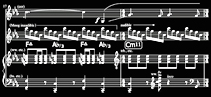
TRANSCRIPTION and AUDIO
only (audio with sync-ed 4-stave reduction of symphonic score) Book, pp. 140-142 , also
on line separately. [0:50] BLOCKED
WORLDWIDE ON YOUTUBE!
Kojak
Theme Commutations [7:57; 2011-10-29] BLOCKED
WORLDWIDE ON YOUTUBE!
Original version plus five radical rearrangements of Goldenberg's 50-second TV theme from 1972: classical, Renaissance, spy rock, pastoral idyll and bossa nova cocktail lounge. Shows importance of accompanimental parameters of expression (chiefly harmony and groove but also some instrumentation and aural staging). Relates to my PhD thesis Kojak - 50 Seconds of Television Music, esp. pp. 216-221.
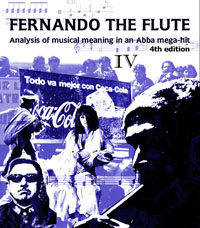
Fernando the Flute: film of the book of the music (ongoing) |
 |
Video timings
0:00:00 Intro:
Titles; Abba: Fernando in Melbourne, 1976; Milton
Nascimento: No analices.
0:02:19 Breakfast
at Ibotirama: Introduction, contextualisation of the song. Book pp. 9-14.
0:04:56 Crejo en angelitos and Tretow's angel dust.
0:06:49 Tagg's discomfort, bus
journey, the point of this video.
0:08:41 Recording, synchronised
transcription and presentation of musemes. Book pp. 19-27
0:13:07 Museme listing.
0:17:12 Museme 1: open spaces
(Beethoven, Handel, Borodin, Copland, Mahler, Schubert)
0:21:11 open spaces
(Vaughn Williams, Grieg, Ives, Bruckner)
0:23:51 summary so far.
Museme 1a: mañana turn and ethnic lute tremolando
0:31:01 Museme 2: sunrise, Zarathustra , Simpsons, Haydn, El condor pasa
0:37:01 Museme 3: explanations;
Fauré, Brahms, Ave Maria,
0:39:54 Milksap intro,
incl. Orbison, Darin, Tillotson, Twitty, Sedaka, Anka, Sam
Cooke
0:43:07 Milksap montage
(52 × [I vi ii/IV V] loops)
0:55:18 Milksap montage:
discussion
0:58:23 afterthought
about recitativo, Speedy Gonzales, Fernando and Latin America
0:59:29 Museme 4: hispano-military
‘boléro’ snares, Green Beret, It’s
Over, Et maintenant
1:02:53 ‘ town crier;
snare danger; Little Drummer; ‘closer’; The
Mission, rat-a-ta-tat!
1:08:45 Temporary end
Chapter
2:
musemes 7-11 — not yet included
Fernando
the Flute - Episode 1: Score and Musemes [15:36] [2017-05-17]
Semiotic music analysis materials accompanying
the book Fernando
the Flute IV (2017). Includes: [1] synchronised score
of the English version of "Fernando" (Abba, 1976) [01:02-05:23];
[2] Basic musematic method (IOCM & PMFCs) [05:23-11:38]; [3]
Quick presentation of musemes [11:38-14:56]; [4] End credits [14:56-15:35].
|
Morricone’s Music for The Mission
|

Farne
un tutt’uno:
analysing Morricone’s music for The Mission (provisional start) [32:14][HELP] . Provisional first part in a film music analysis film project. Includes: [1] Morricone’s problema a farne un tutt’uno and basic questions about the role of music in the film; [2] how to do a cue list; [3] how to name musical ideafs ‘‘sick strings’ (m1A1: 07:35), ‘death drum’ (m2A1: 10:37), etc.; [3] systemising musemes, incl. taxonomy issues; [4] from 27:04, presentation of musemes m1A1a, m1A1b, m1A1c (sick string variants), m1A2 (string screech), m1A3 (visceral string disturbance, incl. ‘Jaws’ motif), and (from 31:27) m1B (tangled woodwind: ‘Penance’)... to be continued...

First
20 seconds of The Mission with thumbnail images and graphic
score [0:20]
The Mission 0:45-1:28 with graphic score and thumbnails [1:38]

Farne
un tutt’uno: analysing music for The Mission (provisional
ending) [7:18]
A suggested conclusion to this film about Morricone’s music for the film, answering questions posed in Part 1 of this project. This video featurs: [1] conjunct descending bass IOCM for Gabriel’s Oboe, including Bach’s Air and A Whiter Shade Of Pale; [2] ‘A man of sorrows’ and ; [3] Vincerò; [4] ethical issues in Latin America; [4] music, human rights, the just, unjust and power abuse; [5] Ontivero Asunción; [6] contrition and sacrifice; [7] musical integration v. apartheid.
Morricone:
Gabriel’s Oboe from The Mission (1986): synchronised transcription [2:06] [2017-04-07]
42
× Gabriel's Oboes (complete) [19:59] (also as
abridged for YouTube, 2010-10-28]
Montage of online performances of 'Gabriel's Oboe', one of the main themes Morricone wrote for 'The Mission' (1986) and one of today's most widely performed pieces of music. Teaching material for film music analysis and popular music aesthetics.

The
Making of The Mission [58:02] [HELP]
NB. This video file consists wholly of material on disc 2 in The Mission DVD box set (Warner Brothers SO 15031, 1996; DVD NTSC Warner 23497, 2003). If you are copyright holder and view this posting of educational material as an illegal act, please contact me and I will delete the file on line. I've posted it because it has considerable educational value and is difficult to come by through commercial channels.
Personal videos |
 |
Go to videos BY, not about, Philip Tagg
Why
I do what I do [3:12]
(1994)
Feature from 1994 BBC broadcast Northwest Tonight (regional news) about
teaching popular music (incl. Kojak & Fernando). Dealing seriously with popular music in those days, I was treated as a minor curiosity, as a “whackademic”.

Philip Tagg
receives Lifetime Recognition Award from the International Semiotics
Institute [3:11] (2014) at the first conference of Numanities (ICoN2014). “The Role of Humanities in Contemporary Society”, Kaunas
University of Technology, 2014-06-02. From Day 1 of streamed
version of conference proceedings (also viewable on YouTube ‘ All awards at 1:58:51 in the the YouTube
streaming (I appear at 2:05:15).

Collateral Murder (Baghdad 2007-07-12)
Greta Thunberg: How Dare You? [1:09] (2019-09)
Edelstam, Palme and the Cuban Embassy in Santiago (1973) [90"]
Adam Curtis’s The
Century of the Self & The Living Dead 1 | 2 | 3 | 4 | 5 | 6 |
Adam Curtis’s The Power of Nightmares — Trailer | 1 | 2 | 3 |
The Koch Brothers: Godfathers of Greed
Graham
Nash and James Raymond: Almost Gone ‘ The Ballad of Bradley
Manning’ (2011) (lyrics added
as subtitles 2013-04-07) [3:53]. Chords: A section shuttles
Dm <-> G then Bb/d <-> Dm (aeolian); B section runs ||: Dm |
Bb A :|| ×2 then | Dm | Bb [Am] | Gm | break ||.
Bill
Hicks on advertising. [2:43] YouTube’s (Google’s) take-down of Bill’s priceless anti-capitalist rant was triggered by a copyright complaint from Warner Brothers, those famously suffering, little-guy freedom fighters in the war against kahm-you-nizz-em . Never forget how much capitalism sucks. And remember that It's impossible to understand popular music history without understanding the inherent evil of 'advertising' (consumerist propaganda: see here and here). For complete transcript of Bill’s 2½-minute rant, click here.

The
Brexshit NHS Liars [1:48]
(2017) “We’ll use the UK’s £350m/week membership of the EU to pay for the National Health Service.” Lies, lies, lies from Boris Johnson, Michael Gove, Nigel Farage and other contemptible clowns. Sue them!

Cambridge Analytica boasts of dirty tricks to swing elections (19:12,
2018-04-09; 360p; right
click to download). In this Channel 4 production (UK), company bosses tell undercover reporters
how honey traps, spies and fake news can be used to help clients (e.g. Trump
& Brexit campaigns). I’ve uploaded this to my site just in case
it’s taken down again from YouTube, etc. so that the truth may be known
as widely as possible. This documentary footage shows how elections and referendums
aren’t won on facts but through big data and psychographics (using social
media, etc., see the 2018 Facebook
scandal), i.e. by exploiting emotions and the subconscious (see 2-min
video 'Advertising IS Propaganda’).
Advertising IS Propaganda [2:00] Edited extract from The
Century of the Self (Adam Curtis), episode 1 (0:08:12-0:09:01; 0:09:20-0:10:18). Includes
Edward Bernays, father of PR/marketing/advertising (comsumerist
propaganda), saying why he couldn't use the word propaganda to
describe PR and advertising. Also advertising guru Pat Jackson on groups of people and their irrational emotions.
I've used this clip in Popular Music History classes when dealing
with the advent of “format radio”.

Adbusters:
‘The Product is You’ (English
only) [0:18]
‘El producto eres tú’ (subtitulado en español) (1999) “Your living room is the factory. The product being manufactured
is you”. I've used this a lot in Popular Music History classes
when dealing with the advent of ‘format radio’.
TRAVEL
|
|
|
|
| Left-click (Mac: Ctrl-click) the relevant or button, or the relevant image or title to activate the video link. Then press Play.
If you get buffering problems, right-click (ctrl-click) or and select the Save Link As... option
to download the video to your device. |
RAIL VIDEOS
featuring
the Relentless Rail trips
Prefatory notes
If you want to decipher the coloured comments flashing by at an illegible speed in this video, please consult the original, full-length footage London Paddington to Hereford train Cab Ride from which it has been edited.
Wolvercote[s]
This Relentless Rail video (#43) gives a general idea of a train route (‘The Cotswolds Line’) associable with particular aspects of class in England. Wolvercote, just north of Oxford, has links to Tolkien, Inspector Morse and Brideshead Revisited (see here and here). It also gives its name to a hymn tune of a particular type (‘public’ school, etc., see here) and the name of a railway junction (map pic | actual pic) on the edge of a designated ‘Area of Outstanding Beauty’ (The Cotswolds), noted for its rolling green hills and villages built in the local stone. It’s often presented as a pastoral idyll from bygone days and has attracted a particular demographic. House prices in the area are among the highest in the UK (search "rightmove cotswolds", "zoopla cotswolds", etc. for info).
To know more about the musical underpinnings of this rich and bizarre semiotic web of ‘Englishness’, please consult Ten Little Title Tunes (Tagg & Clarida, 2003, pp. 209-225, especially ‘Stiff-upper-lip sighs’ (221-225)).
Video synopsis
Intro [00:00], Didcot, [00:10], Oxford [01:25] via Wolvercote Junction [02:10], Hanborough [02:43], Coombe [03:07], Finstock [03:30], Charlbury [03:40], Ascott-under-Wychwood [04:12], Shipton [04:22], Kingham [04:43], Moreton-in-the-Marsh [05:35], Honeybourne [07:18], Evesham [08:16], Pershore [09:11], Worcestershire Parkway [09:55], Worcester Shrub Hill [11:06], Worcester Foregate Street [11:50], Malvern Link [13:05], Great Malvern [13:30], Colwall [14:05], Ledbury [15:00], Hereford [17:16]. Credits etc. [17:57], end [19:09].
Music credits
00:24-02:42 Wolvercote (William H Ferguson) in A. Choir, congregation, organ in Paisley Abbey. BBCtv Songs of Praise, c 2015.YT (=YouTube) UU_cev2ri90.
02:43-05:31 Wolvercote (Ferguson), brass band in Bb, arr. Jim S McGregor, YT UB62Qplku9A.
05:32-10:30
G Thalben-Ball: Elegy for Organ, in B$. Richard McVeigh on Cavaillé-Coll at Cathédrale de Nancy; YT 5bYgPbMlKcQ. London, Paxton, 1954.
10:30-11:54 Elgar: Introduction & Allegro for Strings, Op. 47 — ‘Welsh’ Theme in Eb. London Philharmonic, cond.Vernon Hadley. CD 1985, EMI Eminence EMX 9503.
11:54-13:26 Repton (C H H Parry) in Eb. Co-op Funeral Band Northwest, rec. at JCB Lakeside Club, Uttoxeter, 19th October 2013,YT Jo9lmVy8Cc4.
13:26-15:00 Elgar: Introduction & Allegro — ‘Welsh’ Theme in G. Same source as at 10:30-11:54.
15:00-15:47 Thornbury (Basil Harwood) in D. Rec probably from BBCtv Songs of Praise, c 2015, posted by 'mkariobangi' at YT esJ7WWqG-dI.
15:47- 17:15 Wolvercote in A, same source as at 00:24-02:42.
17:15-17:58 Wolvercote in A on organ with highlighting of the 'in-your-face' C chord in bar 9 (‘I shall not fear the battle!'). John Keys: Traditional Hymns Organ Accompaniments #6, at YT u6YUdtWONwY.
Wolvercote-related notation
W H Ferguson: Wolvercote (notes in video sync with organ sound)
W H Ferguson: Wolvercote (still, 1 p).
B Harwood: Thornbury (still,2 pp.)
C H H Parry: Repton (1 p.)
G T Thalben-Ball: Elegy for Organ, bars 1-13.
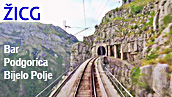
Relentless Rail #42: Bar - Podgorica - Bijelo Polje (Montenegro) [34:17|2 gig] ——either on Vimeo
or on this site Relentless Rail #42 (right-click and "Save link as..." to download)
ŽICG = "Željenička Infrastruktura Crne Gore", literally = Black Mountain (i.e. Montenegro) Railway Infrastructure, i.e. Ferrovie Montenegrine, etc.
This accelerated cabride video is #42 in the series "Relentless Rail" and is based on 3½ hours of original footage by "Dulevoz" (YouTube zomZywCAPTA). It covers the 160 km of Montenegro's super-scenic "Tito line" (Die Tito-Bahn) from Bar on the Adriatic coast via the country's capital, Podgorica (was Titograd), to Bijelo Polje near the Serbian border. For more info, see Wikipedia entries Belgrade-Bar railway and Rail Transport in Montegegro,
Synopsis
00:00 Credits, intro
00:39 BAR
03:00 Sutomore
07:25 Zeta
09:56 PODGORICA
14:30 Mala Rijeka viaduct
16:06 Bratonožići
18:45 Lutovo
21:35 Trebešica
23:22 Kos
23:53 Tara I viaduct
24:33 summit 1032 m
24:51 KOLAŠIN
26:18 (Rovačko) Trebaljevo
27:24 Tara II viaduct
28:20 MOJKOVAC
29:42 Mijatovo Kolo
30:04 Ljuboviča viaduct
31:53 Kruševo
33:23 BIJELO POLJE
34:17 end
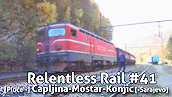
Boznia/Herzegovina: (Ploče) Čapljina - Mostar - Jablanica - Bradina (Sarajevo) [29:53|2.7gig] —— Relentless Rail #41 (right-click and "Save link as..." to download)

Manchester Oxford Road - Huddersfield [11:31| 1gig] —— Relentless Rail #40 (right-click and "Save link as..." to download)
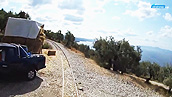
Ano Lechonia/: Άνω Λεχώνια - Milies / Μηλιές [11:44|1gig] —— Relentless Rail #39 (right-click and "Save link as..." to download)
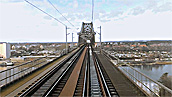
Rendsburg Schleife (loop) and Hochbrücke —— Relentless Rail #38 [2:52] |
Approach from south (Hamburg etc.) on to high-level rail viaduct and bridge at 43 m over Kiel Canal in Schleswig-Holstein. The bridge is followed by a 360°, 4.2 km long, clockwise loop round Rendsburg's Schleife district (named after the rail loop). We end up at Rendsburg Hbf pointing northward towards Flensburg and Jutland (Denmark). For more info, see Wikipedia (DE) Rendsburger Hochbrücke.
 Click to Download
{
Click to Download
{ }
}
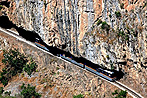
Diakopton - Kalavryta rack railway / Odοντωτός Σιδηρόδρομος Διακοπτού — Καλαβρύτων —— Relentless Rail #37. [c 15'] |
22 stunning kilometres in Greece‘s nothern Peloponnese, from 0 to 767 metres elevation in 15 mins (“88 kph” ≈ 4× original speed (see YT 6AYtD1cQrE). More info)
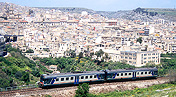
Ragusa - Módica - Scicli (S-E Sicily) —— Relentless Rail #36: 3½× [08:19] |
Numerous 180+° bends, 1 spiral tunnel, countless other tunnels, cuttings, bridges and viaducts, all in descent from c 750 to c 20 m elevation on line from Gela and Vittoria to Siracusa via Ragusa and Noto.
00:05 Map of spiral tunnel at Ragusa
00:19 Dep. Ragusa FS (was “Ragusa Superiore”) located on Piazza Gramsci
02:36 Ragusa Ibla (was “Ragusa Inferiore”)
04:05 Strada Statale 115
05:09 Módica
05:35 Viadotto Guerrieri (SS 194)
07:40 Red signal and Scicli
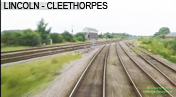
Lincoln - Cleethorpes - Relentless Rail #35 — should be downloaded (right click and "Save as") — possibly the most boring cabride video on this page and therefore perhaps interesting?
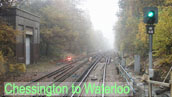
Chessington - London Waterloo - Relentless Rail #34 [4:50] should be downloaded (right click and "Save as"))
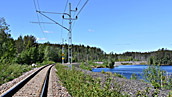
| | Sveriges svenskaste förarkabintur? Nykroppa - Ställdalen - Nykroppa - Kristinehamn — Relentless rail #33 — Sweden's most Swedish cabride?. Relentless Rail #33, Accelerated, annotated cabride (names of stations and larger lakes, etc., directions of the compass (very bendy track)); 2.3 Gig [37:24], HiRes Apr 2021; no audio; 71 km + 71 km + 45 km: [1] From Nykroppa on to Kil-Ställdalen section of Bergslagsbanan (originally built to connect isolated but important mining communities with ocean-going cargo vessels) ; [2] early evening return to Nykroppa; [3] extension of c 45 km from Nykroppa south to Kristinehamn (junction with Stockholm-Oslo line), Original footage by Magnus Olssen (2005). Stops abbreviated. Average increase of speed c 3× original. Mainly electrified, single-track, freight-carrying lines. Extremely bendy route: countless topographical obstacles to avoid, e.g. irregularly shaped masses of 'old hard rock' (urberg — granite and gneiss), irregularly placed glacial lakes and tarns with odd shapes, endless forest, bog, marsh, mire (skog, myr, mosse, kärr), a very sparse population (glesbygd), The incomparably biggest places we pass are Hällefors (pop. 4,000 in 2020) and Storfors (2,200). No other community has more than 800 inhabitants: most have fewer than 100, except of course for Kristinehamn (24,000).
Timings
00:00 Titles and outward journey 18:50 (71 km in 18:50 = 226 km/h
01:22 -1 km Nykroppa arr
02:05 00 km Nykroppa dep
05:39 13 km Loka
08:23 24 km Grythyttan
10:15 32 km Hällefors
12:08 39 km Sikfors
14:48 51 km Bredsjö
18:51 71 km Ställdalen arr
Returresa 10:08(71 km in 10 mins ≈ 426 km/h)
19:52 Ställdalen dep
22:52 Bredsjö
24:17 Sikfors
25:33 Hällefors
26:31 Grythyttan
27:58 Loka
30:00 Nykroppa arr
Bonussträckan
30:10 Nykroppa dep
32:13 Storfors
33:55 Nässundet
34:52 Sjöändan
36:51 Kristinehamn arr

| | Edge Hill - Seaforth - Edge Hill in the 1980s — Relentless rail #32; accelerated (×>2½), annotated; 662.116 kb [11:17] (Dec 2020); cab ride; no audio. From Edge Hill yard, 2½ km east of Liverpool Lime Street station, this Lo-Res VHS instruction video for drivers, recorded in the 1980s, takes us round the east side of the city, past Tuebrook, Everton, Anfield and Walton, down to Bootle, past Alexandra Dock all the way out to Seaforth Container Port; and all the way back to Edge Hill. Original video was found in a skip by train driver Bob Ellis and posted on YouTube as Archive - Crewe to Bootle Docks by Dan Cofey [3:05:17].

| | Märsta - Stockholm - Nynäshamn in 16¾ mins — Relentless rail #31. 1,016,677 kb. 17:26. Cab ride/Hyttvy. Audio. Stockholm commuter train (SL pendeltåg) from Märsta (due north) to Nynäshamn (due south) via the “city tunnel” |0:20 Märsta |1:59 Upplands Väsby |3:05 Sollentuna |4:28 Solna |5:30 Odenplan |5:58 Stockholm City (Centralstation) |6:25 Stockholms Södra |7:48 Älvsjö |9:07 Farsta Strand |10:43 Handen |11:34 Västra Haninge |12:50 Hemfosa |14:33 Ösmo |15:43 Nynäsgård |16:40 Nynäshamn |17:26 end.
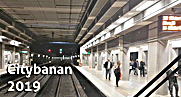
| | Sundbyberg - Stockholm - Södertälje Hamn in 12 mins — Relentless rail #30. 751,492 kb. 12:50. Cab ride/Hyttvy. Audio. Stockholm commuter train (SL pendeltåg) from Sundbyberg (northwest) to Södertälje Hamn (southwest) via new (2017) 6 km city tunnel. |0:00 Sundbyberg |2:10 Odenplan |3:03 Stockholm City (Centralstation) |3:55 Stockholms Södra |Årstaberg |5:40 Älvsjö |Stuvsta |7:05 Huddinge |Tullinge |9:22 Tumba |10:25 Rönninge |11:32 Östertälje |12:32 Södertälje Hamn (Avgång=departure)

St Moritz - Tirano (Bernina line) 61 km in 28½ mins — Relentless rail #27. 1,696,919 kb. 28:33. Cab ride. No audio. Same as Relentless Rail #20, except ‘slower’, in reverse order and better weather, plus slightly better picture quality |0:00 St Moritz |2:12 Pontresina |4:14 Morteratsch | 09:04 Ospizio Bernina |11:07 Alp Grüm |14:18 Cavaglia |19:50 Poschiavo |22:36 Miralago |24:18 Brusio |27:44 Tirano, Piazza della Basilica.

| | Tirano - San Moritz (Bernina line) 61 km in 19 mins — Relentless rail #20. 1,145,741 kb. 19:16. Cab ride. Some audio. Fully captioned
cab ride with Rhaetian Railways over the Bernina Pass. Timings: 0:11 Tirano |1:15 Campocologno |2:08
Brusio |3:28 Miralago |4:40 Le Prese |5:55 Poschiavo |7:54 Cadera
|9:27 Cavaglia |11:22 Alp Grüm |12:38 Ospizio Bernina |14:23 Bernina
Diavolezza |15:38 Morteratsch |17:08 Pontresina |18:43 St MoritZ. For return journey, see Relentless Rail #27.

| | Vladivostok - Novosibirsk in 35 mins. Relentless rail #29. 2,161,394 kb. 36:33. No audio. Standard “all-Russian” Trans-Siberian route via Khabarovsk, Chita, Ulan-Ude, Irkutsk, Krasnoyarsk + 3 very brief contributing excursions (满洲里, Ulanbataar, БАМ). |0:00 Titles |1:36 Vladivostok |3:29 Khabarovsk |5:50 Birobidzhan |8:16 Belogorsk |13:00 Маньчжу́рия |13:42 Чита |18:55 Mongolia |20:00 Ulan-Ude |23:16 Baikal |27:12 Irkutsk |30:17 Усоле-Сибирское |31:54 БАМ & Taishet |32:53 Krasnoyarsk |35:44 Novosibirsk |36:33 End
| | Ferrocarril
Central Andino (Peru) Chosica-Galera (39') — Relentless rail #26. 2,339,724 kb. 39:04. Mostly cabride. Some audio. From Chosica
in the eastern suburbs of Lima (altitude 860 m and 54 km inland
from the Pacific) to the continental divide, 170 km away at an
altitude of 4,871 m, i.e. a gradient of 1 in 35.4 (29‰).
Includes 7 switchbacks, countless tunnels and breathtaking bridges.
It passes through dramatic mountain scenery from green and wooded
through deep canyons to tundra-like conditions. The slow journey
has been accelerated ×4 (doesn't look so fast!), edited
and re-annotated. |00:00 Chosica |04:45 San Bartolomé
|07:47 Puente Carrion |11:35 Matucana |14:50 Viso Abajo |16:29
Viso Ariba |19:46 Puente Chaupichaca |20:32 Tamboraque (una bomba
de tiempo ecologica) |24:15 Tamboraque Ariba |27:16 Cacray Abajo
|29:19 Chicla Abajo |31:00 Casapalca |32:25 km 164 |36:00 Laguna
Tictcotcha |37:15 Ticlio |38:28 Galera.

| | Blaenau Ffestiniog - Llandudno Junction in 16 minutes — Relentless rail #25. 921,808 kb. 15:47. Cabride. No audio. Accelerated cab ride through splendid NW Welsh scenery
on a sunny day. Original real-time footage © 2017-04-22 by Track
Access Service Limited (www.trackaccessportal.com). Speed changes,
editing, annotation (stations, rivers, main roads, etc.), Feb
2019. Timings: 0:00 Blaenau Ffestiniog |2:37 Roman Bridge
|4:35 Pont-y-Pant |7:00 Betws-y-Coed |9:15 North Llanrwst |12:10
Tal-y-Cafn |14:35 Cyffordd Llandudno

| | Narvik
Havn to Riksgränsen (Ofotbanen), 2018, in 21 mins — Relentless rail #24. 1,275,935 kb. 21:47. No audio. Accelerated
(x±2), annotated, cab ride, from Fagernes harbour terminal
at sea level in Narvik (Norway) to Riksgränsen, 523 m higher and
43 km east of Narvik on plateau in Swedish Lappland (ave. gradient
12‰ [1 in 82]). Timings: 0:00 Titles |0:51 Narvik Havn
|4:50 Narvik Stasjon |9:30 Straumsnes |13:00 Rombak |16:28 Katterat
|20:53 Grensen/Riksgränsen.

| | Old ferrovia
Pontebbana (Carnia-Arnoldstein, 1994) — Relentless rail #23. 1,906,645 kb. 31:47. Audio. 1994 cab
ride in sunshine along scenic old route through Dolomites from Carnia (Italy) via Pontebba
and Tarvisio to Arnoldstein (Austria) in 32 mins. Names of stations, tunnels and bridges (with lengths) and other highlights appear as on-screen text. Gradients
are shown in ‰. |0:00 Titles |0:50 Carnia |4:05 Resiutta |7:15 Chiusaforte |9:20
Dogna |11:09 Ponte di Muro |12:08 Pietratagliata |13:25 Pontebba
|17:13 Bagni di Lusnizza |20:00 Ugovizza |21:43 culmine/summit
|23:45 Tarvisio 1 |25:15 Tarvisio 2 |29:09 confine/Grenze/frontier
|29:40 Thörl-Maglern |31:26 Arnoldstein
| | Voss
to Bergen, 2019, in 20 mins Relentless
rail #22. 1,206,233 kb. 20:19. No audio.Accelerated early winter
morning commuter run —cab ride and very scenic. Timings (station
stops): |0:00 Voss |1:45 Bulken |4:47 Evanger |6:52 Bolstadøyri
|8:20 Dale |10:25 Stanghelle |12:45 Vaksdal |14:53 Trengereid |17:28
Arna |19:25 Bergen. Annotated: stations and halt names; c 100
tunnels (with lengths), original real-time code (0-73 mins). Station
and passing-loop stop times abbreviated. Acceleration factors
(approx.): tunnels: ×3-6, elsewhere ×1½-3. Editing error at 05:39-05:50
— sorry!

Manchester Piccadilly Platform 14
to Liverpool Lime Street Platform 10 via Warrington Central in
18½ minutes on a rainy day Relentless
rail #21. 1,103,297 kb. 18:36. No audio.
Has its own aesthetic. Surprisingly watchable.

Liverpool to Crewe in under 11 mins Relentless Rail #19. 1,555,768 kb. 10:42 (2018-04-13). Includes: [1]
(00:00) dramatic sunken exit from Lime Street; [2] (02:21) the
distant tower block where I live; [3] (05:17) Runcorn bridge;
[4] (07:26) Weaver Junction and viaduct; [5] (passim)
informative labelling of numerous en route phenomena. The clip
is erroneously labelled Relentless Rail #18: it is in fact #19 |

| | Glasgow - Mallaig in 84 minutes Relentless Rail #18. Mid-Res (480p) 955,296 kb. 1:24:50. (2017-09-08) No audio. Accelerated
cabride over the complete 264 km of Scotland’s West
Highland Line (sunny periods and some rain). Visuals derive mainly from this original
4½-hr real-time file. Some tunnels and stops are abridged. On-screen text gives names of places and
other information, incl. direction of travel (N, S, E, W, etc.). Some station timings: Glasgow 00:25; Helensburgh Upper
12:07; Arrochar & Tarbert 21:50; Crianlarich 31:30; Bridge
of Orchy 38:06; Rannoch 43:24; Tulloch 51:11; Fort William 0:59:30;
Glenfinnan 1:08:17; Arisaig 1:18:53; Mallaig
1:23:42. Other event timings: Craigendoran 10:40; Horseshoe
viaducts 36:21 ff; Rannoch Moor 44:22 ff; Glenfinnan Viaduct 1:07:13
ff; Atlantic Ocean, Loch na Uamh viaducts and tunnels 1:15:37-1:16:07.

Blaenau Ffestiniog - Porthmadog - Caernarfon in 35 mins
Relentless Rail #17. 2,562,076 kb.
[37:13] (2017-09-02) No audio.
Complete accelerated
cab rides over narrow-guage heritage lines in NW Wales.
Original real-time audiovisuals in 3 clips on Timsvideochannel: 1, 2, 3. Location
timings: Blaenau Ffestiniog 0:16; Tan-y-Grisiau 1:37; Dduallt
3:10; Tan-y-Bwlch 5:39; Penrhyndeudraeth 8:20; Minffordd 10:42;
Porthmadog 12:29-13:12; Pont Croesor 15:58; Nantmor 19:00; Beddgelert
21:06; Rhyd Ddu 25:42; Waunfawr 30:43; Dinas 33:54; Caernarfon
36:26-37:13.
| | Carlisle - Appleby - Settle - Skipton in ½-hr Relentless rail #16. 193,489 kb. 31:48 (2017-03-06) 139 km. Approximate audio. Complete, accelerated
(×4) goods train cab ride over Aisgill Summit in light rain
with sunny intervals, through the pastoral greenery and scenic,
bleak moorland of Cumbria and Yorkshire amid the Wuthering
Heights of England's north country (Brontë, 1847). Sorry
about the stubborn raindrop between Settle and Skipton. Timings
and distances from Carlisle: |6:20 Armathwaite 15 km |8:54 Lazonby 32 |12:53
Appleby 49 |16:02 Kirkby Stephen 66 |19:33 Garsdale 82 |23:23 Ribblehead 97 |26:26 Settle
114 |27:58 Hellifield 123 |31:16 Skipton 139.
| | Salta
- San Antonio de los Cobres (NW Argentina) Relentless
rail #15. 7,979,930 kb.
[1:07:57] (2017-02-22) No audio. ccelerated
(×4-×6) cab ride on 217 km covered by El Tren
a las Nubes on Ramal 14 of the Ferrocarril General Belgrano
(Salta-Antofagasta), from 1187m to 4220m altitude, up the Rio
Toro gorge with 2 switchbacks (zig-zags), round 2 ascending loops
to the high, desert-dry Andean plains (altiplano/puna),
through 21 tunnels and 13 viaducts to end at the Polvorilla viaduct,
250 km short of the Chilean border.
Los Angeles to Santa Barbara in 10
minutes Relentless
rail #14 [9:44] (2017-01-31). Accelerated (×4)
cab ride, with some cuts and abbreviations of Amtrak train from
L.A. Union Station to Santa Barbara via Burbank, Chatsworth, Oxnard
and Ventura.
Rail exit from Göteborg towards
Uddevalla (winter) Relentless
rail #13
[2:53] (2017-01-24) Silent accelerated
(×3) cab ride of exit from Göteborg C towards Uddevalla
on the Bohuslän line (Bohusbanan). Negotiates countless points,
freight spurs, goes through 4 major junctions, crosses several
major roads and 2 rivers (Säveån + the Marieholm swing
bridge over Göta Älv). Footage stops short of Lillhagen
on Hisingen just N of Göteborg.

Göteborg to Alingsås in
9 minutes Relentless
rail #12 [8:52] (2017-01-23) Silent accelerated
cab ride on first 45 km of mainline Göteborg-Stockholm through
valleys, rocky massifs, forest, lakes, etc. Place names, population
counts, altitudes (elevations) and other types of information
added as subtitles.

Boråsbanan: Göteborg to
Borås in 14 mins Relentless
rail #11 [13:46] (2017-01-07) Silent accelerated
(×4.77) 73 km cab ride between Sweden’s second and
eighth biggest cities through challenging terrain with rocky massifs,
forest, marshland, lakes at different altitudes, rapids., etc.
Place names, population counts, altitudes (elevations) and other
types of information added as subtitles.
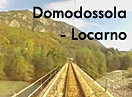
Domodossola
to Locarno in 15 mins Relentless
rail #10 Trenino
velocità ridicola Ferrovia Vigezzina/Centovallina [16:43]. Accelerated cab ride [14:45] (no audio) preceded by maps
and info [1:58]; annotated with locations, populations, elevations,
direction of travel, etc. Via Masera, Trontano, Druogno, Santa
Maria Maggiore, Malesco, Rè¨, Camedo, Intragna. Other excellent
videos of this scenic line exist, including Centovalli
railway drivers view Locarno-Domodossola (clips 1, 2 and 3)
and Laurent Fasnacht’s 2-hour
real time original, used to produce this turbo-speed version.
More info about this scenic railway in Domodossola-Locarno
Railway (Wikipedia).

Inverness to Thurso & Wick Relentless
rail #8 [5:50] cab ride, outside shots,
abbr., incl stills, accelerated sequences, no audio.

Dingwall
to Kyle of Lochalsh Relentless
rail #9 [6:15] cab ride, outside shots,
abbr., accelerated sequences, a few stills, no audio

Tallinn
to Tapa, Tartu and Valga in 20 mins Relentless
rail #7 [21:23] (2013)
Estonian rail accelerated cab ride, complete, annotated, bkgrd
mus instr. rock.

Wien
Südbahnhof to Venezia Santa Lucia in 43 mins Relentless
rail #6 [42:58] (2010) complete, annotated,
‘ludicrous speed’ ‘super-accelerated‘, backwards,
no audio; via Wiener Neustadt, Gloggnitz, Semmering, Mürzzuschlag,
Bruck-an-der-Mur, Klagenfurt, Villach, Udine, Treviso, Pordenone,
Mestre [HELP]
York
to Manchester Piccadilly in 15 mins. Relentless
rail #5 [15:04] (2011) complete accelerated cab ride, annotated, no audio
via Church Fenton, Leeds, Dewsbury, Huddersfield, Stalybridge,
Guide Bridge

Low
Gill to Tebay [2:16] (2015-04-23) smartphone
(3 takes), passenger view S & E, real time, live audio (v.
quiet)
Glasgow
Queen Street to Crianlarich in 5 mins (was Relentless rail #4).
Replaced
by first 31 mins of Relentless Rail
#18.

Shrewsbury
to Machynlleth in 12 mins. Relentless
rail #1 [11:31] (1988-05-11) cab ride,
accelerated, no audio, via Welshpool, Newtown, Caersws.
Machynlleth
to Pwllheli in 15 mins. Relentless
rail #2 [14:49] (1988-05-11) cab ride complete,
accelerated, no audio; via Cyffordd Dyfi/Dovey Junction, Aberdyfi,
Tywyn, Barmouth, Harlech, Penrhyndeudraeth, Porthmadog, Criccieth
Cyffordd
Dyfi/Dovey Junction - Aberystwyth in 3 mins. Relentless
rail #3 [03:05] (1988-05-11) complete sunny
cab ride, accelerated, no audio; via Borth
Terrific Termini ‘A’
series (nerdy quiz) [1:17:42] (2018-05-12) String of
clips showing UK rail terminus stations as places where trains
arrive and depart. Can you identify all 51 termini? (I can’t)
Answers in red after each clip.  Info and details.
Terrific Termini ‘B’
series (nerdy quiz) [1:11:32] (2018-05-12) Second
quiz battery: string of clips of UK rail terminus stations. Can
you identify them? Answers in red after each of the 41 clips. Info and details.
Trams
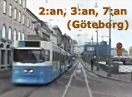
Göteborg
trams 2, 3 and 7 in and around city centre [11:05] driver’s view, accelerated, no audio
Istanbul
Tram #1, Karaköy/Tophane to Kabata? [4:20] (2015-12-08, c 13:30) smartphone passenger view from Istanbul
tram #1 going NE along European shore of Bosphorous, real time,
live audio.
Driving
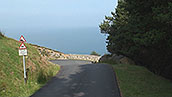
Pontllyfni
to Nant Gwrtheyrn (Llithfaen) [08:25] (2011-07-30,
ed. 2017-02-23) Scenic sunny drive (edited) on Llŷn Peninsula
in North Wales. Passes Clynnog Fawr, Llanaelhaearn, Yr Eifl and
Llithfaen. Filmed before coastal forest above Nant Gwrtheyrn was
destroyed in a hurricane. No audio.

Burbank
Tourist Drive [also
on YouTube]
[11:29] (2009-11-14) Nokia phone footage (passenger view through windscreen) of a drive
along route 405, along Ventura Blvd, then past Burbank's studio
domains (Universal, Warner, Disney), all late on a Sunday afternoon
in November 2009. I’m the tourist with the phone camera and
Peter D Kaye is my driver and guide. The TV music stereotype studies
used in this clip are by Tagg and can be heard complete under Hearing the Detectives at www.tagg.tagg.org/ptavmat.htm#Audio.
Tracks used in this video are "Coke Squad", "Robocopter",
"Throg's Neck Thugs", "Afroglass Club 33"
and "Arizona Drains".
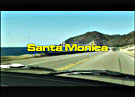
Californian
Driving Day Trip [15:38] (2009-11-15) Passenger’s windscreen view of places/things
like Santa Monica, Pacific Highway, Malibu, Oxnard, Santa Barbara,
Ventura Freeway, Topanga Canyon. To save space, the constant driving
(great shots) is slightly sped up and there is no audio track.
My host, driver and guide on this trip was Peter D Kaye (Santa
Monica).
Vivaro (Curino) - Brusnengo [03:04] (Dec 2012) Smartphone thru passenger windscreen. Driver: Franco Fabbri. Led Zeppelin on car stereo.
Milano
Centrale to Via Guerrini [04:11] (2012) Smartphone twilight footage, passenger’s windscreen
view, of Milan traffic. Driver: Franco Fabbri. Music: XTC - Scarecrow People.

Tunel
lo Prado (Chile) [1:46] (2013-08-24, 13:28) Smartphone, passenger windscreen view;
route 68 (Santiago-Valparaíso);
Lo Prado tunnel (2,808 m). Chilean music on in-car stereo; driver:
Rodrigo Torres
Pontllyfni
to Caernarfon [7:15] (2014-12-14) Passenger view; A499 Pontllyfni-Caernarfon;
real time, real audio, abbreviated (Llanwnda & Bontnewydd
skipped).
Finding
Ffynnon Wen [02:43] (2014-12-14) How to find Ffynnon Wen when approaching
Pontllyfni (SW of Caernarfon), on the A499 (Ll?n Peninsula artery)
towards Pwllheli; real time, real audio
Carretera
A64 Vilaviciosa towards Oviedo (Asturias) [04:03] (2015-09-09) Smartphone footage, passenger’s windscreen
view, driving West on motorway running parallel to the Asturian
coast, east of Oviedo/Gijón. Driver: Diego Garcia Peinazo.
From ‘The Rocket’ to Merebank [003:54] (2018-01-10) Smartphone footage, passenger’s windscreen
view from west end of M62 motorway in the eastern suburbs of Liverpool to Merebank Tower in Sefton Park. Driver: Martin Dempsey.
other travel

Hotel
Lift in Granada [01:03] (2012-05-10) Views of the Sierra Nevada and of the city
recorded on smartphone while using the lift in Granada’s
Abba Hotel (sic)
Plaza
San Luis in Valparaíso [00:31] (2013-08-11) Cartographical anomaly. 360° manual smartphone
pan at the point in the Monte Alegre district of Valparaíso where
seven streets converge (Plazuela San Luis).

Aberllyfni
+ Traeth Pontllyfni [01:55] (2014-12-15) Where the Afon Llyfni flows fast into the
Irish Sea. 360° manual pan on one of Wales’s most scenic
(not warmest or sandiest) beaches. Good footage of December-grey
sea and small breakers with good audio of water over pebbles on
beach; real time; real audio.
Road
to Spurn Head breached [00:40] (2015-07-27, 19:09; breached December 2013) Cartographical
anomaly. Manual 360° smartphone pan at narrowest point at Spurn.
Holding the umbrellas: Kaire Maimets.
 AUDIO
AUDIO
—Stuff composed, arranged or performed by Philip Tagg—
—Stuff composed, arranged or performed by others—
Audio (only) by Philip Tagg
Phil Tagg: Hearing the Detectives (1990) —21 terrific title tunes (MP3) with complete storylines (HTML)
Real title themes for Swedish TV
- Samtal
(SvTV 1980)
- (a) Jag
vill leva jag vill dö i Norden (original) (1982)
(b) Jag
vill leva jag vill dö i Norden (broadcast)
(SRP1, 1982)
- Packhus
18 (normal)
Packhus
18 (rock) (SvTV 1981)
- Studio
G (as broadcast on TV)
Studio
G (end titles) (1982)
Röda Kapellet: recordings 1972-76 —all our commie hits transferred to MP3.
Duo Seraphim (4:42,
HD, 2018-04-05) . SSATTB anthem for Trinity by Philip Tagg,
sung by the choir of King’s College Cambridge, conducted by David Willcocks,
on Trinity Sunday, 1963. This video includes the synchronised score.
Apologies for the abysmal audio quality of the recording — via a Philips reel-to-reel
machine at 3¾ i.p.s. with distortion at high-volume peaks, all transferred to cassette.
Still, the gutsy enjoyment of the piece is infectious, unmistakable and rendered faultlessly
by the choir. I was impressed then and still am 58 years later. Worth a listen even if the audio quality is rubbish. Full
score also available separately.
Miscellaneous arrangements and interpretations (MP3 files)
Christmas Carols, Göteborg c 1989
OTTP (or UTTB) Korg M1 versions of Christmas Carols for the English School in Göteborg. Needless to say: never used!
Miscellaneous examples and illustrations
Voice non-recognition
Audio (not by/with Tagg)
ABORIGINAL
Trad. (North Arnhem Land): Djedbangari (‘Djapani’) from Australian Aboriginal Folk Songs (Columbia World Library of
Folk and Primitive [sic!] Music).
BA-BENZÉLÉ
(Trad.) ‘Lullaby 1’ from Music of the Ba-Benzélé
Pygmies (UNESCO, 1965)
GÖTEBORGS BRECHTENSEMBLE: Alabama Song (Brecht/Weill,
arr. Andersson, Avanti AVLP 06, 1979); lead vocals: Liliane Håkansson,
guitar: Bengt Blomgren, keyboard: Bernt Andersson.
Jan
LING & Märta Ramsten: The Gärdeby Folk Melody:
A Musical Migrant (1985).
- Music
examples — mp3, 18 mins
- Music examples
— list of items, timings, docx
Tõnis
MÄGI: Koit (=‘Dawn’, 1987)
Rev.
D.C. RICE: A Sure Foundation ‘ There Is Honey
In The Rock’ (c 1928)
STORMY SIX: ‘Panorama’ (Leddi) from Al Volo (1982); also viewable as notation.
VIETNAM
(Trad): ‘Do Doc Do Ngang’ (Boat Song) from Music
from Vietnam & Cambodia (1999)
 POWERPOINT
No media embedded in first three presentations
These presentations are useless on tiny phone screens. Use laptop, desktop or tablet instead!
I was so Naïve!’ Forty years of frustration with music, musicians, musicology and popular music studies.
Keynote, NIMiMS symposium, Leeds Beckett University, 17 January, 2015
Troubles with Tonal Terminology
... on the de-ethnocentrification of structural terminology.
XII Congreso SIBE, Universidad de Extremadura, Cáceres, 8 November 2012
Musemes in The Mission (regular teaching, Music & Moving Image, Montréal, 2008; rev. 2012)
Dénoter la voix : une approche pragmatique et didactique (in French and English). Keynote, colloque international La voix dans les chansons : approches musicologiques, Lyon & Paris 2016-03-03, 04.
The VVA Way to a Commonsense Conceptualisation of Music: Visual-Verbal Association and image as metonymic intermediary in the understanding of musical meaning.
Keynote presentation at conference Transpositions: Music/Image, XIII International Conference of the Department of Musicology, Faculty of Music, University of the Arts, Belgrade, 13 October 2016.Audiovisual and text hyperlinks. UNSUITABLE FOR DEVICES WITH TINY SCREENS (use laptop, desktop or tablet instead!).
Linking Musical Text and Context
…putting the music back into popular music studies… Prepared for the 2nd-year BA degree course in Music
University of Manchester, 16 November 2012
Music in [Popular] Music Studies:� an epistemological necessity, a.k.a
[Popular] music studies and the need for an urgent reform� of music theory. UNSUITABLE FOR DEVICES WITH TINY SCREENS (use laptop, desktop or tablet instead!). PowerPoint presentation given at the Music Departments at the univerisities of Edinburgh and Glasgow, 1-2 November 2016.
©opyright
Google have mechanised identification
of recorded works used in videos posted by YouTube users. While
this practice may serve a purpose in combatting the illegal duplication
and redistribution of copyrighted work, it is irrelevant to the
‘edutainment’ clips I produce that relate to the topics
I have taught and researched since
1971: Popular Music Analysis, Popular Music History,
Semiotics of Music in the Mass Media, etc. (see my CV). These subjects are
of central importance in the understanding of meanings and ideologies
circulating in today’s world. It is altogether impossible
to disseminate information about these topics without citing extracts
from copyrighted work that demonstrate or exemplify essential
points of method and content.
NOTICE TO COPYRIGHT HOLDERS
No clip listed on this page contains any infringement of the Digital Millennium Copyright Act. Every such clip citing the work of other authors conforms to all criteria determining the fair and/or scholarly use of citation according to U.S. Federal Law
(Sections 107-118 of the Copyright Act; title 17, U.S. Code), as well as to the precedent concerning the transformative
nature of work citing other works (Campbell v. Acuff-Rose Music Inc, 510 U.S. 569; 1994). If, as copyright holder, you wish to contest the posting of any material included in a recorded file on this website, please send me a short email message so that I can put you in contact with 'my lawyer’ (he co-authored a large book with me and practises as a senior media lawyer in New York).
 problems
YouTube carpet bombing. YouTube mechanically scans all uploaded videos for potential breaches of copyright. Even if I’m 100% within the law, several of my videos on YouTube have been treated like terrorists: they are either ‘blocked in some countries’ or ‘worldwide’, or flagged as containing ‘matched third-party content’, or they have simply been taken down. I have repeatedly complained to YouTube that their mechanical policing of my edutainment videos contravenes the ‘Fair Use’ provisions made in US law for the dissemination of scholarly, non-profit productions but I have been threatened with total excommunication from YouTube if I persist in vindicating this democratic right and pursuing this educational duty. ( Fair use definitions are in the US Federal Code ('Copyright Law of the United States', 2011), §107 (p. 19) and §118 (p. 74) [PDF, government document]; for info on the transformative factor in Fair Use, see here). Most videos listed in this file can be either viewed on, or downloaded from, this site if you click on the relevant link. I have now dumped YouTube altogether and use it no more. They are welcome to ostracise me: I neither want nor need them anyhow. My audiovisual materials are now accessible on Vimeo or on this site. Happy viewing/listening!
For more about copyright, check out this section on this site...
> Intel notes no longer exist
> Intel extra comments no longer exist
Eventual new video (0:00, 2018-xx-xx)
Eventual new video (0:00, 2018-xx-xx)